
Research objections
Work through objections about time, cost, and trust in the results.

Research objections
How to respond to your team’s objections
Many researchers in professional communities say they face it regularly. Below, we have collected the most common objections and ways to respond to them.
Common objections and how to respond
Research is too complicated
Where do we start? Which method should we choose? Where do we find the right users? What if they turn out to be irrelevant? How do we analyze everything afterward? At the beginning, there may be more questions than answers. But research does not have to be heavy or cumbersome. In this guide, we will break the process down step by step and walk you through launching your first study.
It is expensive
Some research methods are inexpensive. A focused test can reveal a problem while there is still time to change the design.
We do not have time or capacity
Product managers always have many parallel priorities. That is why research should fit naturally into their workflow: short formats, clear takeaways, and minimal extra load. Even one quick test saves more development hours than it takes to run.
We already take too long to get started
It may feel like research only slows the work down: while we prepare a scenario and audience, the solution is already due for release. Today, in a few hours, you can test a prototype, receive audio and video recordings of sessions, or launch a survey and immediately see the first responses.
Not everything needs to be tested
That is true: you do not need to check every button or chart color.
It is important to focus on risky decisions:
- things that are fundamentally new and have not yet been validated in the product,
- functionality without direct analogues,
- changes that can strongly affect key metrics or users’ perception of the product.
These are exactly the things worth testing first. This reduces the fear that “we are losing speed” and, on the contrary, helps the team move faster: small fixes can be shipped immediately, while new or debatable decisions are better validated in advance so you do not lose more time and resources later.
Five participants are too few
A qualitative usability test aims to find interaction problems. For an initial round with one fairly similar user group, around five participants can be a starting point.
When is that not enough?
- Unmoderated tests. In remote research, some recordings may be low quality, so it is worth increasing the sample size.
- Different segments. If you need to compare groups, for example new and experienced users, each group should have its own minimum number of respondents.
- To estimate a proportion to a chosen precision or compare variants, calculate the sample size for that objective.
This is not our audience, just some unclear respondents
Pathway monitors research participants and their answers every day and filters out bad-faith respondents using heuristics, trap questions, and manual review.
How Pathway checks response quality
To make sure respondents fit your task, set up filters and add screening questions. They will help you find the right people.
It is hard to find respondents
Today, finding respondents is easier than ever. In Pathway, you can:
- Share a test link with your own audience. Just copy the research link in your account and share it with your audience in any convenient way.
- Connect your own verified external panel.
- Use the Pathway panel — a couple of clicks and it is ready.
- Need a rare audience? We are here to help, and you can always ask us to find any audience you need. Just tell us who you need to attract, and we will handle the rest.
Stakeholders already approved the release
Even if the team is confident in the solution and stakeholders have given the green light, unmoderated research is a fast and inexpensive insurance policy against serious mistakes. Surveys help check whether hypotheses really match users’ perception. Remote usability tests show how the product works in reality — outside the team’s assumptions.
We already know everything about our users
We are not our users. Even when we feel we understand them, in practice:
- A button that is “right there” can go unnoticed.
- A simple scenario can suddenly turn into a dead end.
- A small thing that seems trivial to us can become a reason to leave.
- A product you personally cannot live without may be needed only by a narrow segment.
We do not have dedicated researchers
With this guide and Pathway, you will launch your first study.
Keep the dialogue open
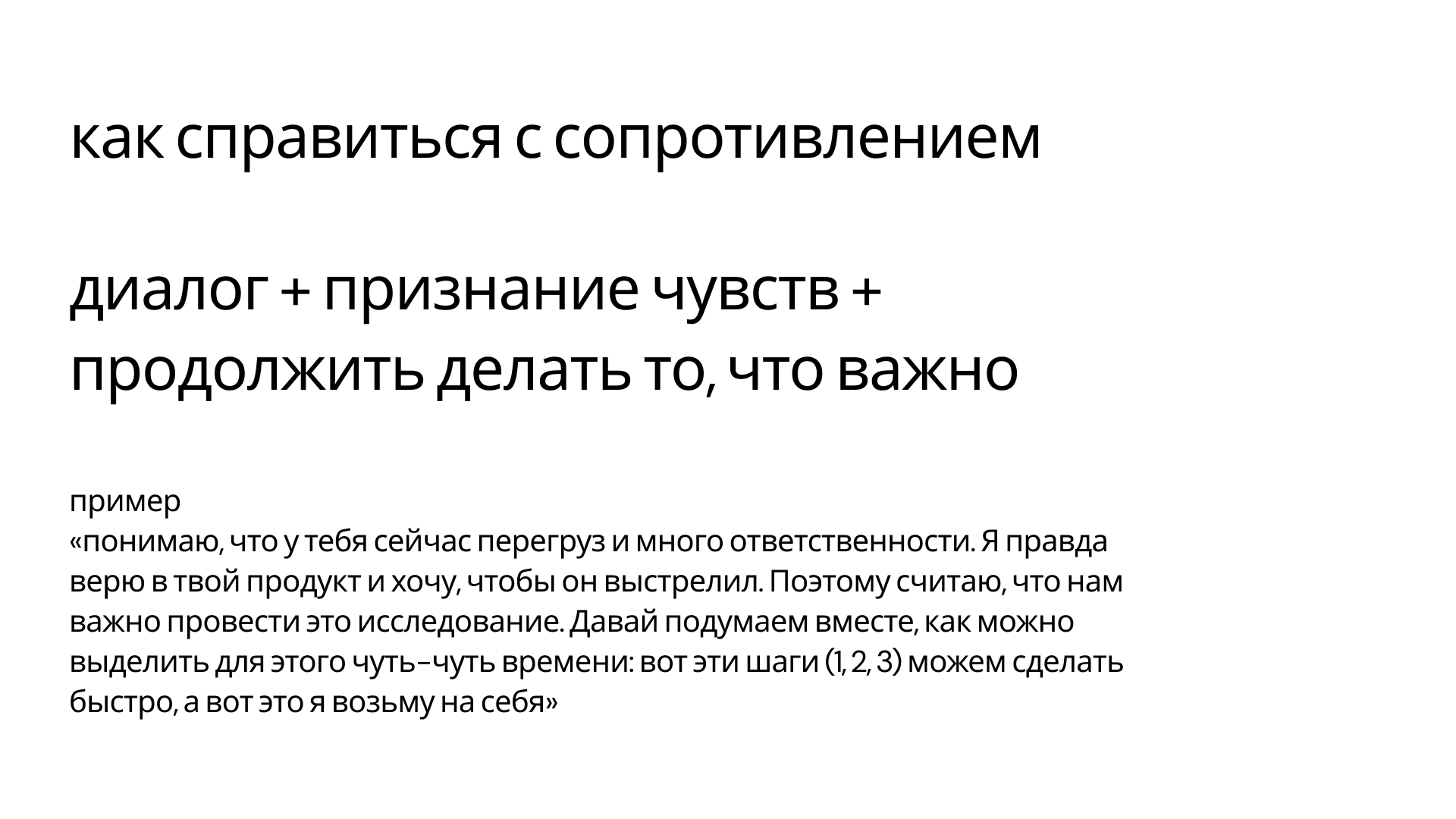
Resistance to research decreases when the team has facts, examples, and its own positive experience. But it takes time: to get used to new processes, overcome doubts, and move past old beliefs. The best way to handle it is to stay in dialogue, acknowledge feelings, and calmly keep doing what matters for the product.
And the earlier you start researching, the more time, money, and energy you will save for yourself and the team.